Drive any coastal lane on the Isle of Man for half an hour and a recognisable house type starts to emerge. Lime-washed walls, slate roof, thick stone underneath the render, a porch tucked into a corner sheltered from the prevailing south-westerly. The Manx coastal home is one of those quiet vernaculars that you don't notice until you've seen fifty of them, at which point you can't unsee it.
What's striking is that the form is not really a style. It's an accumulation of weather decisions made over three centuries, by people who could not afford to get the choices wrong. The houses that survived are the ones that worked. The ones that didn't were quietly pulled down or replaced.
Stone First, Style Second
The base material almost everywhere is local stone — slate in the south, the harder Manx greenstone elsewhere — in walls that are typically 500 to 700mm thick. Thicker than mainland UK equivalents, because the wind speed on the island regularly hits 60mph and there is no point in building lighter walls that will crack and leak. The lime wash on the outside isn't decorative; it's a breathable, moveable finish that lets the wall dry out between storms.
The Manx National Heritage archive is the best source on the older houses. The Manx National Heritage archive has thousands of photographs of nineteenth-century cottages, and the consistency is striking: same gables, same slate roof pitches, same lime-washed exteriors, same small windows facing the weather.
The Orientation Question
Mainland visitors often expect coastal houses to face the sea. Manx houses, often, do not. The main door is more likely to face away from the prevailing wind — usually inland or to the east — with the sea-facing wall reduced to two or three small windows and a chimney. This looks wrong to a London architect and entirely right to anyone who has tried to open a south-westerly-facing door on a wet February afternoon.
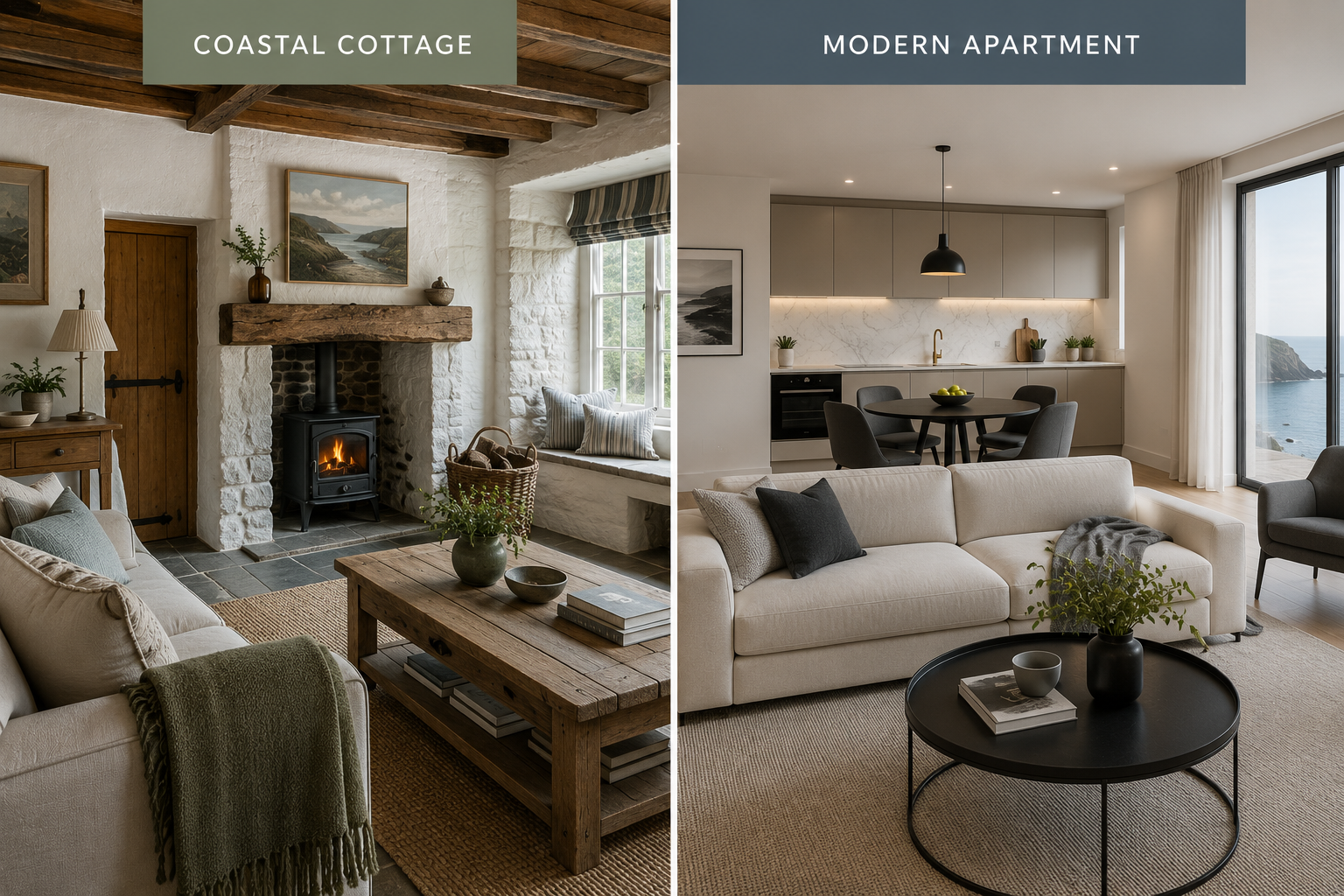
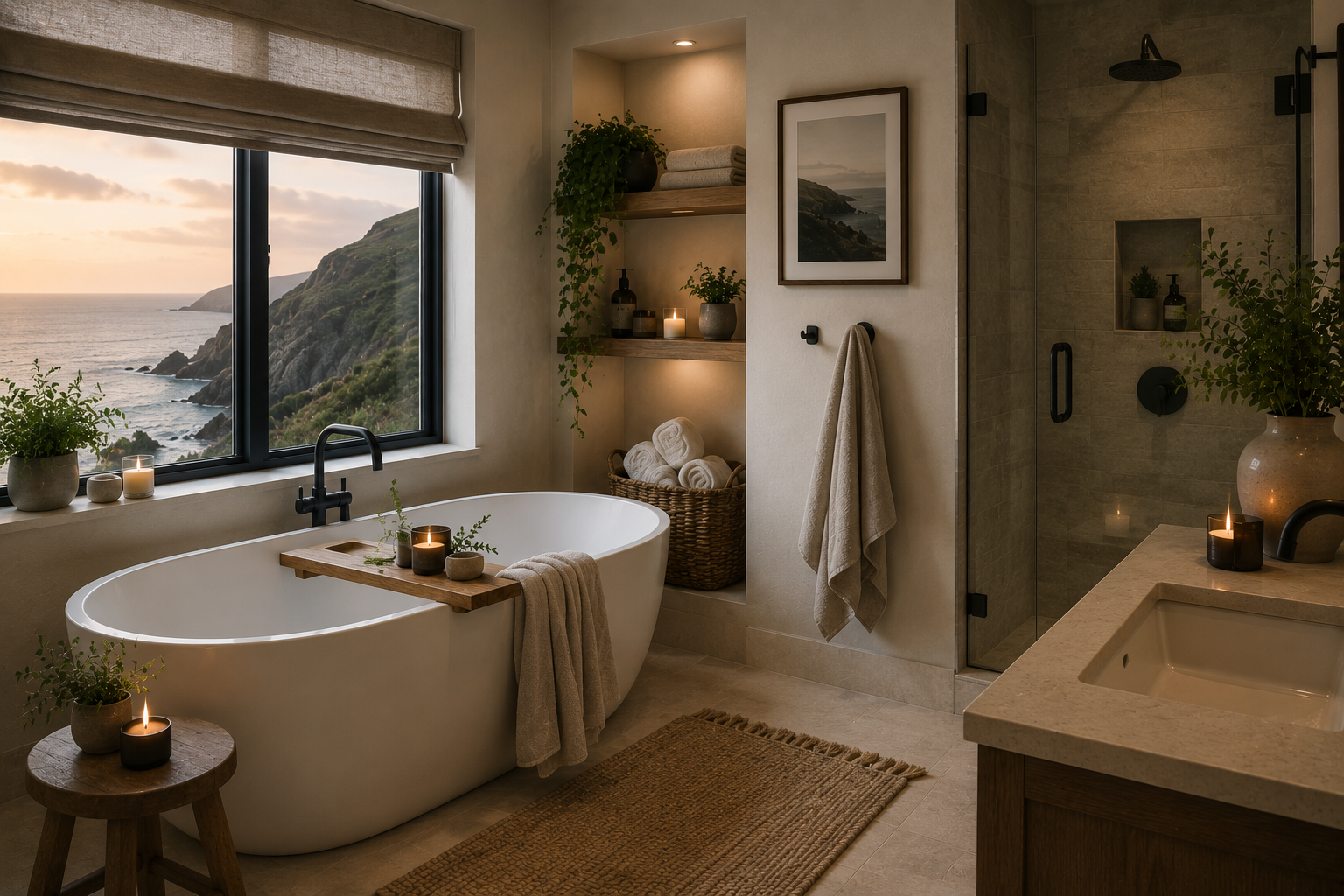
The newer apartments and conversions on the island have started to reverse this. Floor-to-ceiling glass facing the sea, picture windows above the bath, sliding doors onto exposed terraces. These work well in summer and become problems in winter. The houses that have lasted are the ones that took the view as a secondary consideration.
The Slate Roof
The slate roof is the third constant. Manx slate is harder and slightly heavier than Welsh slate, with a darker, almost blue-grey tone. Roofs are pitched steeper than English coastal averages — typically 35 to 45 degrees — to shed the wind-driven rain that arrives almost horizontally for half the year. Eaves are kept short. Gutters are oversized.
The slate-and-stone combination ages beautifully. A well-maintained Manx cottage looks the same at fifty years old as it did at five. A poorly-maintained one degrades in a recognisable sequence: lichen on the slate first, then moisture in the lime wash, then a soft spot in the rendering. Spot the sequence and you can date the next round of maintenance from the road.
The Modern Echo
The best of the recent Manx coastal architecture — the converted barns, the new-build apartments, the carefully extended cottages — takes the vernacular seriously. Thick walls. Slate roofs. Lime renders that breathe. Small windows facing the weather, larger ones facing the shelter. Modern insulation tucked behind traditional finishes.
The worst takes none of this seriously and produces holiday lets that look impressive in summer photographs and underperform in February. Walk the island in winter and the difference is unmissable. The vernacular evolved for a reason. Ignoring it is a choice with consequences.