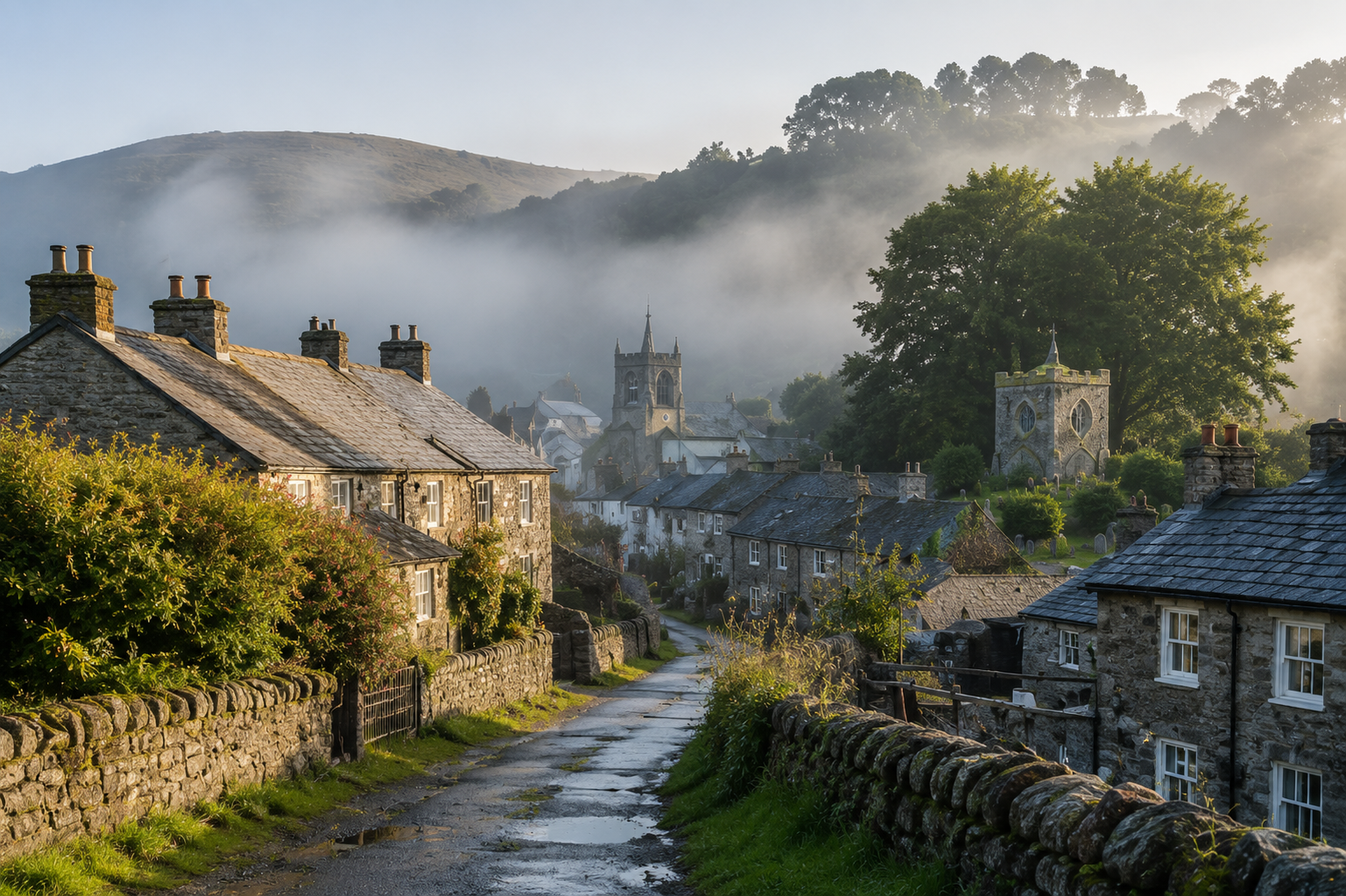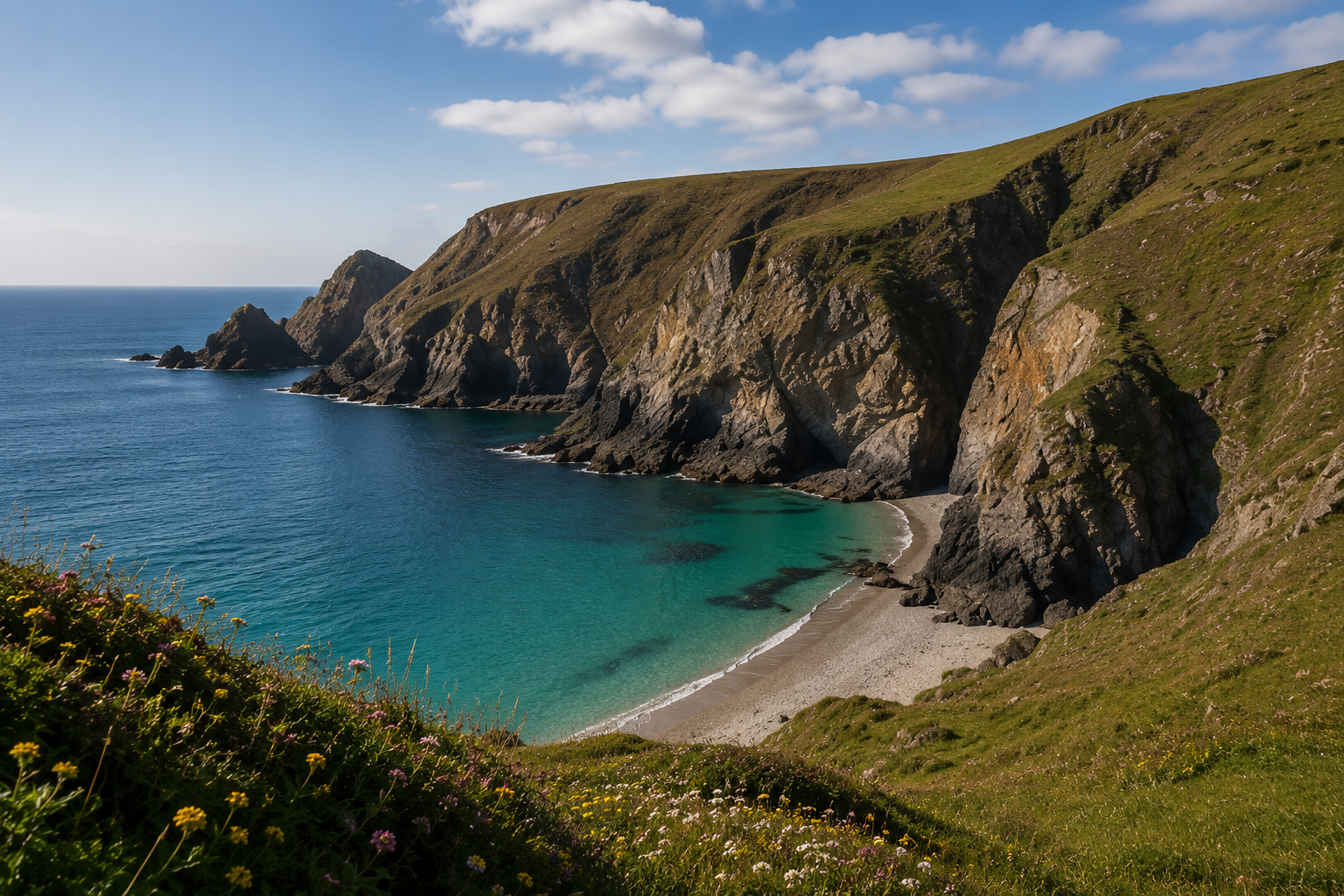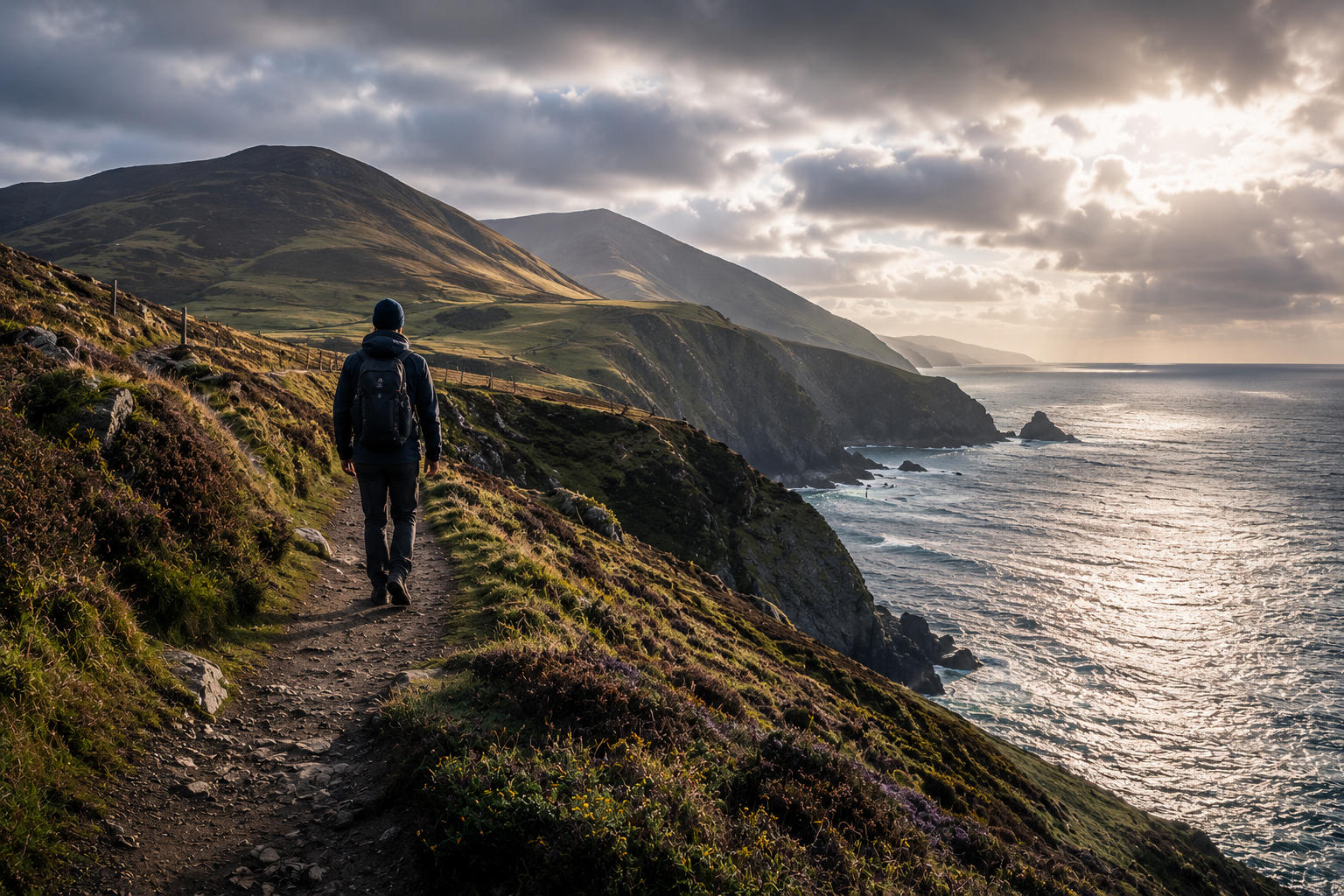
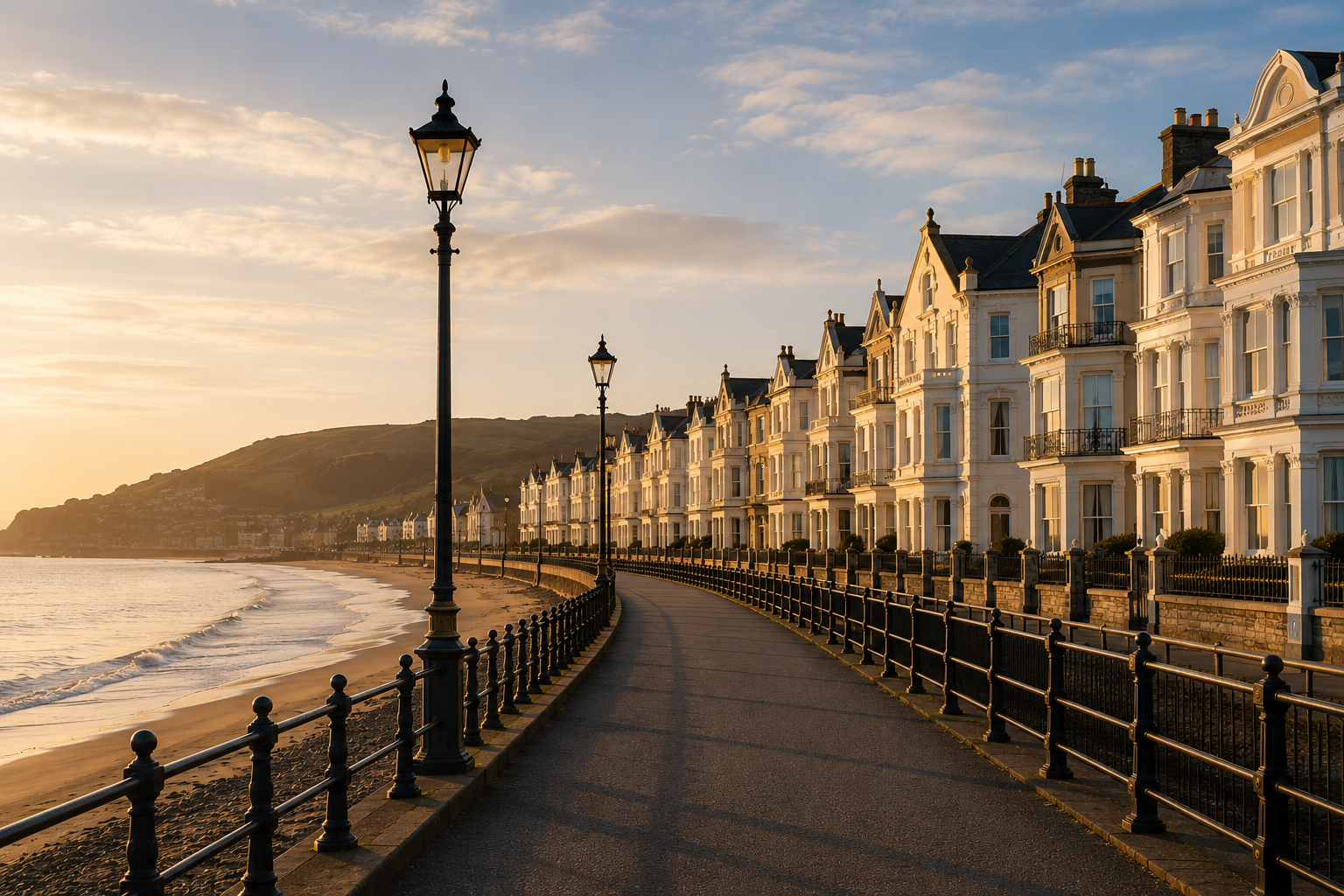
The Isle of Man is small enough that, in theory, where you stay shouldn't matter. From any base you can drive to any other point in well under an hour. In practice, the choice of village makes a substantial difference to the rhythm of the holiday, the kind of food you end up eating, and how often you actually use the car.
This is a quick map for first-timers and an opinionated one for the regulars who have been booking the same cottage for ten years and might consider trying somewhere new.
Douglas: The Working Capital
Douglas is the largest town on the island and the most obvious place to land. The ferry terminal is here, the airport bus comes through, and the seafront promenade — with its restored horse trams in summer — gives the town a small Edwardian theatricality. Stay in Douglas if you want restaurants within walking distance, easy access to the bus network, and the option of a city break that happens to be on an island.
The downsides are predictable. It is a working town, not a film set. The weekday morning has traffic. Some of the seafront hotels are tired, and the better self-catering stock is mixed in with student lets and serviced flats. Pick your building carefully.
Onchan: The Quiet Middle Ground
A mile north of Douglas, Onchan is technically a village but functions as a suburb. This is where a lot of the more thoughtful self-catering apartments are concentrated. You get easy access to Douglas on foot or by tram, the headland walks above Onchan Head, and a meaningful drop in evening noise compared to the centre. Most of our regular readers who base on the east coast end up here, or close to it.
Onchan is also where you find Groudle Glen, with its small Victorian railway and the wooded valley path down to a quiet beach. The combination of suburb-quiet and immediate access to a proper coastal walk is rare on a small island.
The West: Peel and Beyond
Peel is the alternative answer. A small cathedral city on the west coast, built around a harbour and dominated by the ruin of Peel Castle on St Patrick's Isle. The light here is different from the east — you get the sunset over the Irish Sea, the kippers from the smokehouse on the quay, and a tighter, older street pattern.
Stay in Peel if you want the most photogenic of the Manx towns and don't mind being half an hour from Douglas. The trade-off is fewer restaurants and a slightly slower pace. For most of our readership, that is a feature rather than a bug.
The South: Castletown and Port St Mary
The south of the island is its own country. Castletown was the original capital and still feels like one — a small market square, a medieval castle, narrow streets. Port St Mary and Port Erin are the working fishing harbours at the southern tip, each with a curved beach and a different angle on the light.
This is the base for anyone whose priority is the southern cliff walks and the boat to the Calf of Man. The downside is distance: you are forty minutes by car from Douglas and the airport, which adds up over a week.
The North: Ramsey and the Quiet Coast
Ramsey is the second-largest town, in the north, and it gets less press than it deserves. A long Victorian iron pier, a wide bay, the start of the coastal road to Maughold and the Bride hills. Self-catering stock here is smaller and quieter, and the prices reflect it. If you want the most isolated week the island offers without going fully rural, the north is the answer.
How to Decide
The honest test is this: do you want walking distance to restaurants, or do you want the kitchen of your apartment to do most of the cooking? If the first, Douglas or Peel. If the second, Onchan, Port Erin or anywhere in the north. Cotterdale tends to attract the second group, which is part of why the apartments here keep their regulars.